Exposed Pipes and Conduit
Horizontal runs collect airborne residue along their top surfaces. Vacuuming first limits the amount of loose material released during detail wiping.
Serving Richmond, Virginia & surrounding areas
Remove the grease-laden dust and loose debris that collect on pipes, ducts, rafters, conduit, and other hard-to-reach surfaces in your commercial kitchen.
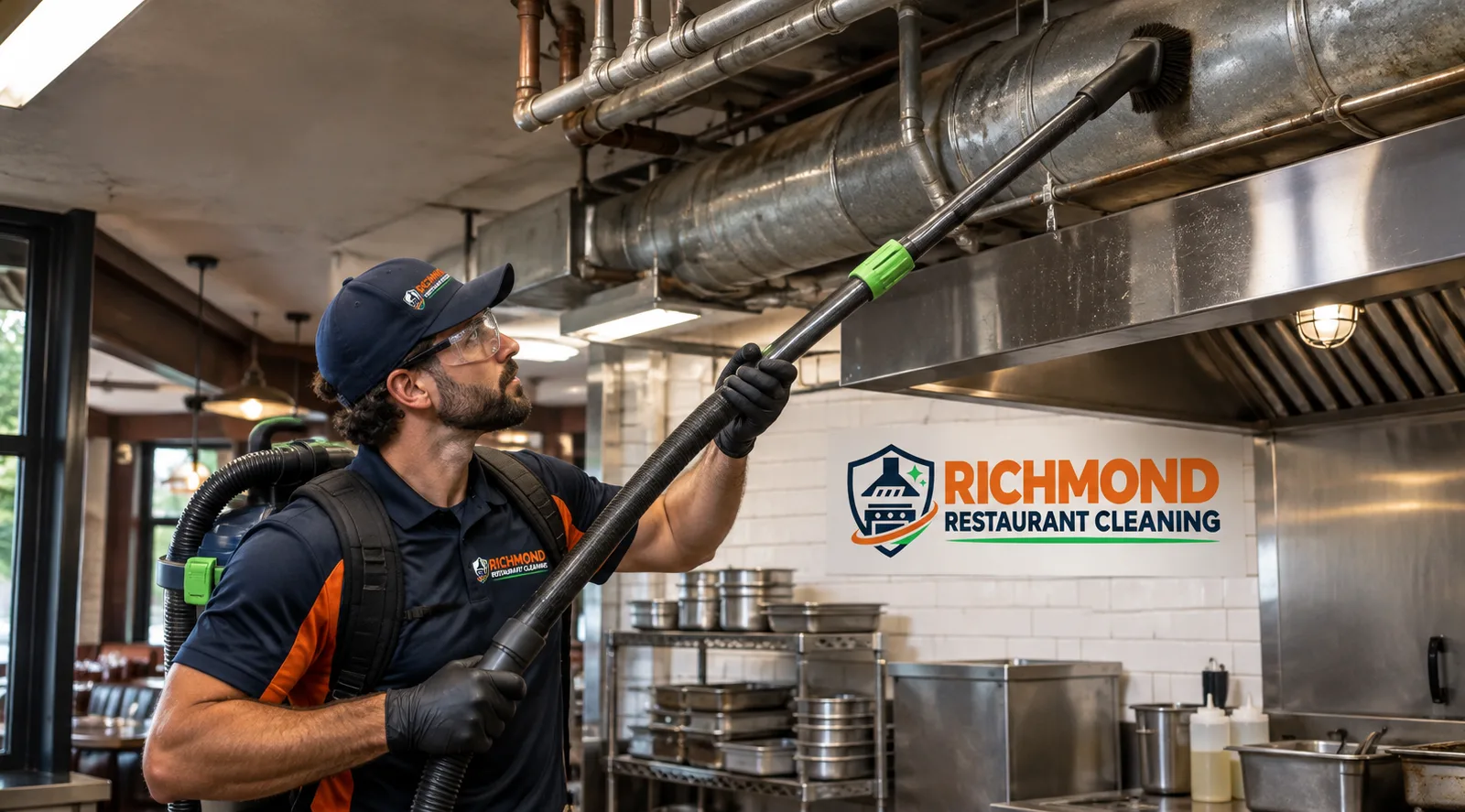
Restaurant High Dusting Mechanicsville addresses the areas routine wipe-downs rarely reach. Exposed ceilings, structural members, refrigeration lines, conduit, light housings, wall tops, vents, and the upper surfaces of equipment can accumulate dust mixed with airborne grease. Once that film builds up, it traps more debris and may release particles into the space below.
Richmond Restaurant Cleaning plans this work around the layout and operating needs of each kitchen. During every project, Richmond's local restaurant service protects preparation surfaces and equipment, works systematically through the overhead zone, and collects loosened material instead of brushing it into the room. The goal is a controlled cleaning process that leaves elevated surfaces visibly cleaner without disrupting more of the operation than necessary.
Mechanicsville restaurants often depend on busy routes such as Mechanicsville Turnpike and Interstate 295 for employees, vendors, and customers. Scheduling matters when prep, deliveries, and service already compete for limited kitchen time. High dusting can be arranged during a planned closure, outside food-production hours, or alongside a larger deep-cleaning schedule.
The scope starts with an inspection of the accessible overhead area. Common targets include ceiling corners, exposed joists, rafters, pipes, suspended utility lines, conduit, cable trays, vent exteriors, light fixtures, wall ledges, signage tops, and the upper surfaces of tall equipment. Every kitchen is different, so the written scope should identify what will be cleaned and note areas blocked by fixed equipment or building components.
The method depends on the residue. HEPA-filtered vacuum tools are useful for dry dust and loose debris because they capture material at the point of contact. Microfiber tools can remove remaining fine dust from suitable surfaces. Greasy film may require a compatible degreaser and controlled hand wiping, provided the material can tolerate moisture. Electrical components and sensitive fixtures need a dry or carefully limited-moisture method.
High dusting is distinct from cleaning the inside of a commercial kitchen exhaust system. Exhaust hoods, filters, fans, and grease ducts require their own procedures and scope. Overhead cleaning may address the accessible exterior surfaces around that equipment, but it should never be presented as a substitute for exhaust-system service.
Request a Callback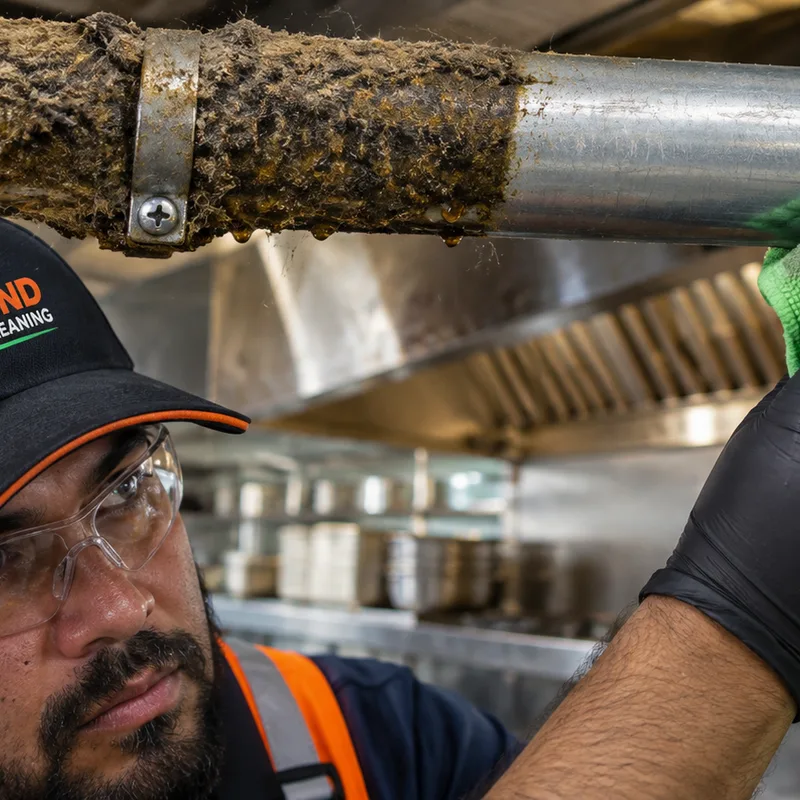
Horizontal runs collect airborne residue along their top surfaces. Vacuuming first limits the amount of loose material released during detail wiping.
Open-ceiling kitchens can have broad overhead surfaces with joints and edges that trap debris. Access height and safe equipment placement affect the work plan.
Fixture housings, suspended lights, vent exteriors, and nearby ledges need methods suited to electrical and HVAC components. Power or airflow may need to be managed before cleaning.
The tops of walk-ins, cabinets, shelving, and tall appliances are easy to miss during routine closing tasks and may hold heavy deposits.
Cobwebs and fine dust collect along perimeter joints, especially where air movement pushes particles toward walls.
Residue near active cooking equipment is often more adhesive. These areas may need degreasing after dry material has been removed.
We review ceiling height, residue type, equipment placement, food-contact surfaces, utilities, access constraints, and the safest locations for ladders or other access equipment.
The plan identifies included surfaces, excluded components, access needs, and a work window that avoids active food preparation whenever practical.
Food and movable utensils must be removed or secured. Preparation tables, cooking equipment, and other exposed surfaces are covered as appropriate before overhead work begins.
Technicians use commercial vacuum tools and extensions to collect cobwebs, dust, and loose buildup. Working from higher areas toward lower ledges reduces repeat cleaning.
Suitable surfaces with greasy film receive controlled detail cleaning using compatible products. Sensitive electrical, porous, or damaged materials are handled according to their condition.
Protective coverings are removed carefully, accessible surfaces are checked, and any settled debris related to the work is collected before the kitchen is returned for normal cleaning and setup.
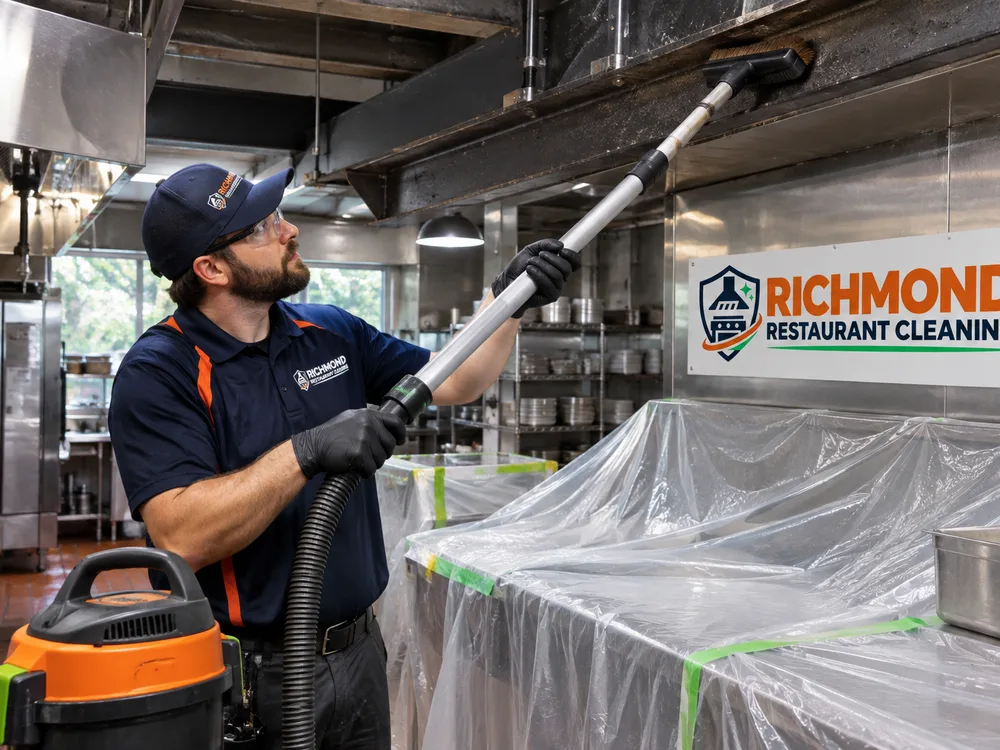
Overhead cleaning should take place when exposed food is absent and production has stopped in the work area. Dusting during prep or service can move debris toward food-contact surfaces, open containers, or active equipment. A controlled shutdown also gives technicians room to position access equipment without interfering with cooks and dish staff.
Before work begins, the restaurant should secure ingredients, smallwares, and disposable packaging. The cleaning team can then isolate or cover the work zone, use direct-capture vacuuming, and clean in a planned direction. After the overhead work, preparation surfaces should receive the restaurant's normal cleaning and sanitizing procedure before food production resumes. Cleaning removes soil; sanitizing is a separate step performed on an already clean food-contact surface with an appropriate product and contact time.
Virginia's humid summers can add to the challenge because greasy residue tends to hold dust firmly rather than remaining dry and easy to lift. The right sequence matters: collect loose particles first, then treat bonded film. Starting with wet wiping on a heavily dusty surface can turn residue into streaks and spread it across pipes or fixture housings.
Request a CallbackThere is no single high-dusting interval that fits every restaurant. A kitchen with open rafters, long cooking hours, frequent frying, strong air movement, or limited overhead access may need attention more often than a lower-volume kitchen with enclosed ceilings. The useful standard is condition based: inspect elevated surfaces regularly and schedule service before loose residue becomes heavy enough to shed or bonded grease becomes difficult to remove.
A practical inspection should include pipe tops, light housings, vent exteriors, wall ledges, and the area over tall refrigeration equipment. Use a flashlight from several angles. Pay attention to fuzzy deposits, darkened grease films, cobwebs, residue around air outlets, and debris on surfaces directly beneath the overhead zone.
Changes to airflow can also alter where dust settles. If residue returns unusually quickly near a supply diffuser or return grille, the restaurant may need an HVAC professional to evaluate that system. High dusting removes accumulated soil, but it does not repair ventilation equipment, correct pressure imbalances, or replace filter maintenance.
Request a CallbackRestaurant high dusting in Mechanicsville typically costs about $500 to $2,000 for a small or midsize commercial kitchen, while large, tall, or heavily coated spaces may cost $2,000 to $5,000 or more. These are general planning ranges, not a fixed quote.
Final pricing depends on ceiling height, square footage, grease level, access equipment, fixture density, containment, and whether work must occur overnight. The exact cost is confirmed after the overhead area and operating schedule are reviewed.
A walk-through can define the overhead surfaces, access requirements, residue conditions, and work window before cleaning begins.
Call for a Free QuoteHigh dusting is usually scheduled outside active food preparation and service hours. Overhead work can dislodge dust, and ladders or access equipment require clear floor space. An after-hours window or planned closure gives the team time to protect equipment and collect residue before the kitchen returns to operation.
A smaller accessible kitchen may be completed within one work window, while a large open-ceiling space or heavy grease buildup can require additional time. Ceiling height, the number of pipes and fixtures, equipment obstructions, and the amount of detail wiping all affect duration. A walk-through provides a more useful schedule than square footage alone.
Portable items and smallwares should be removed, but fixed equipment may remain if it can be protected and does not block safe access. The pre-service review identifies anything that the restaurant must move. Technicians should not climb on cooking appliances, shelving, or improvised platforms to reach overhead surfaces.
High dusting should be listed as a specific part of the scope rather than assumed to be included in routine kitchen cleaning. Elevated surfaces require additional access planning, protection, and tools. A written scope should identify ceiling areas, pipes, light housings, ledges, and equipment tops that are included.
The removable amount depends on the surface material, coating condition, residue age, and access. Sound, washable surfaces can often be vacuumed and degreased, while porous materials, damaged coatings, exposed insulation, and sensitive electrical components may limit wet cleaning. Those conditions should be documented before work starts.
No, general high dusting does not include the internal cleaning of hood exhaust ducts or fans. It addresses accessible overhead room surfaces and may include exterior housings when suitable. Internal grease-exhaust cleaning is separate work with different equipment, access, and documentation requirements.
Remove exposed food, ingredients, utensils, packaging, and personal items from the work zone. Secure movable objects, identify sensitive equipment, and provide access to agreed areas. After overhead cleaning, the restaurant should complete its normal cleaning and sanitizing process on food-contact surfaces before production resumes.
Tell Richmond Restaurant Cleaning about your ceiling height, kitchen layout, visible buildup, and preferred work window. We will help define a practical high-dusting scope for your Mechanicsville restaurant.