Equipment cleaning · Short Pump

Restaurant Equipment Cleaning in Short Pump

Remove baked-on grease, food residue, and buildup with a practical cleaning plan built around your equipment, operating hours, and kitchen workflow.

✓Cooking and cold-side equipment ✓Surface-compatible methods ✓Planned around kitchen operations
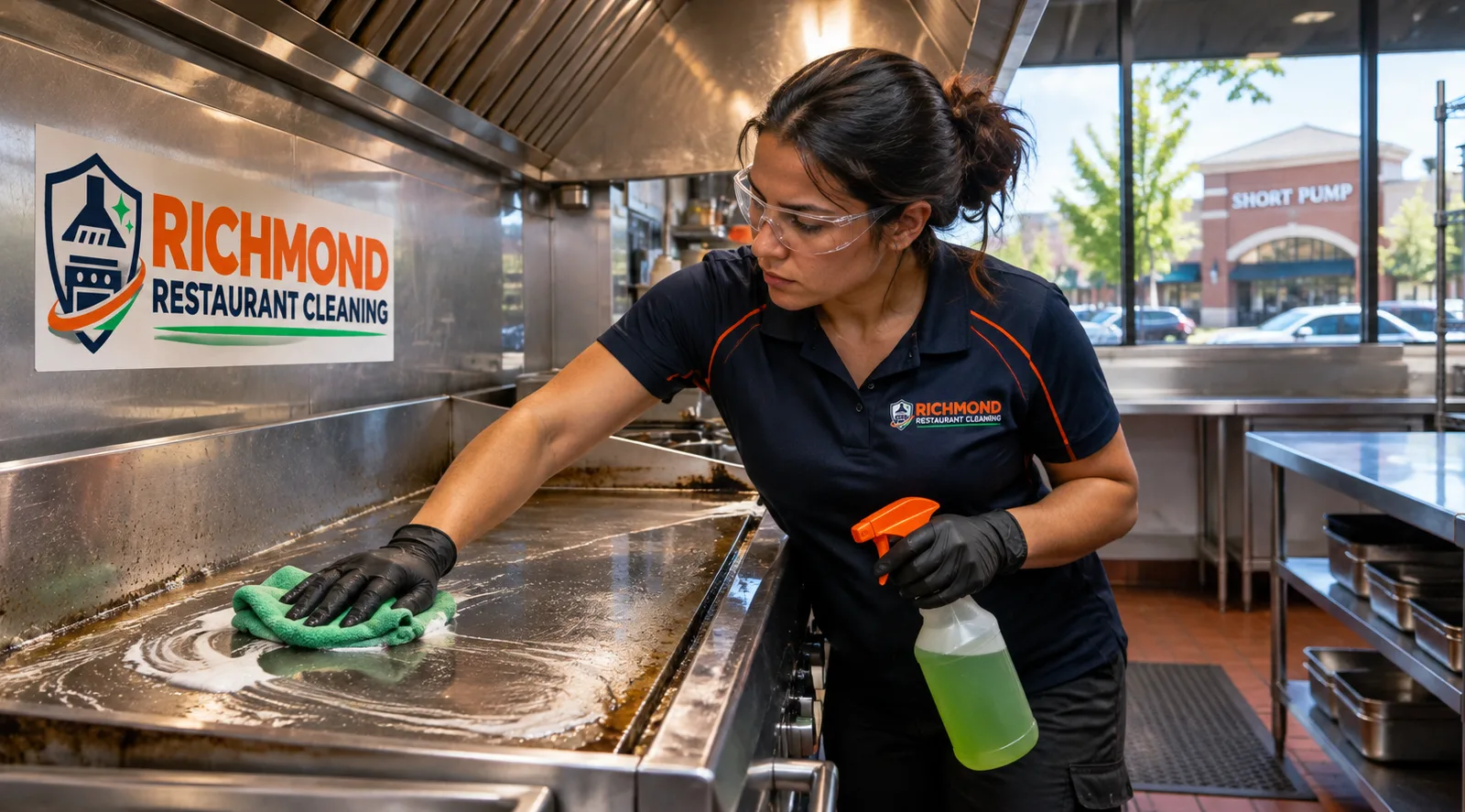
A trained cleaner degreasing stainless steel cooking equipment in an active Short Pump commercial kitchen, with nearby food and utensils safely cleared from the work area.
Cleaning scope

Detailed Cleaning for Hardworking Commercial Kitchens

Restaurant Equipment Cleaning Short Pump addresses the grease and residue that routine shift cleaning may leave on equipment exteriors, controls, seams, legs, casters, and surrounding surfaces. Richmond Restaurant Cleaning develops the scope around the equipment on your line and the access available, rather than treating every kitchen the same.

Our crew can focus on selected problem equipment or work through a broader list during a planned service window. With an experienced restaurant team in Richmond handling the work, we account for how prep schedules, deliveries, and opening times affect when equipment can be cooled, moved, cleaned, and returned to use. Before work begins, we confirm the equipment list, priority areas, site access, and any surfaces that require special handling.

Short Pump has a large concentration of restaurants around West Broad Street and Short Pump Town Center. Busy service periods and limited downtime can make planned access as important as the cleaning itself. We coordinate the work area so staff know which equipment is unavailable and what needs to cool, be emptied, or be disconnected by an authorized party before cleaning starts.

Request a Callback
Service inclusions

What Restaurant Equipment Cleaning Can Cover

The exact scope depends on the appliance, its condition, and manufacturer guidance. Typical work may include accessible surfaces on ranges, ovens, griddles, fryers, charbroilers, steam equipment, warming units, refrigerators, freezers, prep tables, shelving, carts, and small appliances. We pay close attention to handles, knobs, edges, seams, splash zones, legs, and casters where residue collects.

For suitable equipment, the process may involve scraping heavy deposits, applying a compatible degreaser, allowing controlled dwell time, agitating the soil, removing the loosened residue, rinsing or wiping as appropriate, and drying the surface. Stainless steel requires non-damaging tools and work in the direction of the grain. Painted finishes, aluminum, control markings, gaskets, and electrical components need different treatment.

Cleaning does not replace mechanical repair, internal appliance servicing, fire-suppression work, or exhaust-system cleaning. Grease inside ducts or exhaust fans requires a separate specialty scope. We identify visible concerns that fall outside the agreed work so the operator can direct them to the proper contractor.

Request a Callback
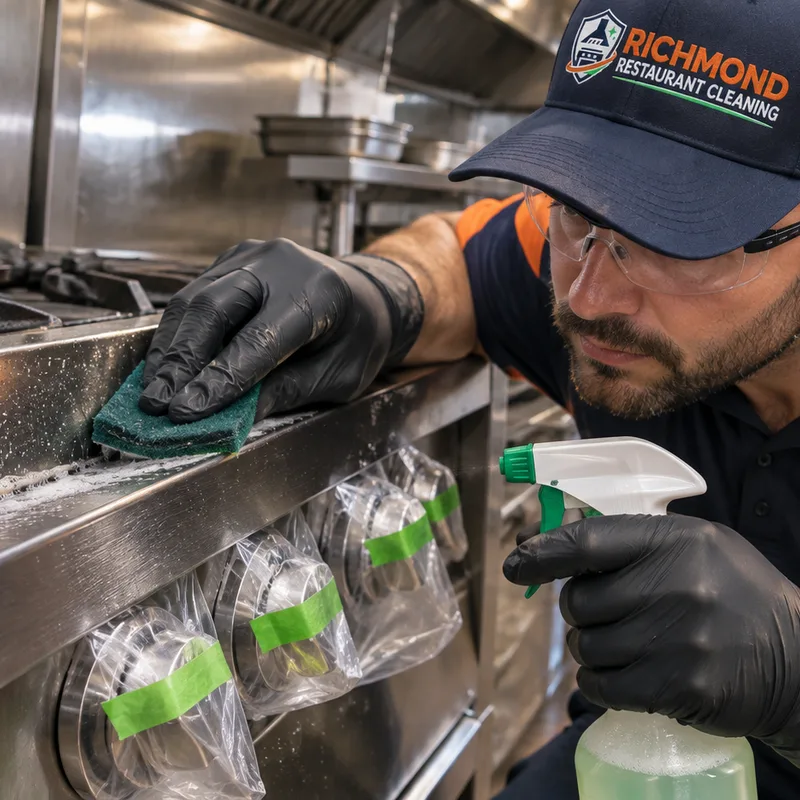
Close view of a technician using a non-scratch pad and controlled degreaser on a stainless steel range, showing protected controls and attention to seams and edges.
Methods and products are matched to the equipment surface and soil level.
Equipment priorities

Priority Areas on a Commercial Cook Line

Cooking Equipment

Ranges, griddles, charbroilers, fryer exteriors, oven doors, and warming equipment can develop carbonized food soil and sticky grease films. Cleaning focuses on accessible, service-safe surfaces without disturbing calibrated or sensitive components.

Cold-Side Equipment

Refrigerator and freezer exteriors, handles, gaskets, accessible shelving, and nearby floor contact points collect spills and hand-contact soil. Food must be protected and temperature-sensitive products managed by restaurant staff during access.

Prep and Holding Equipment

Prep tables, carts, racks, steam tables, and hot-holding units need careful work around seams, rails, casters, and undersides. Product-contact areas are treated with compatible products and completed with the required rinse or sanitation step.

Sides, Backs, and Undersides

When equipment is safe and approved to move, cleaning behind and beneath it can remove residue missed during daily routines. Access depends on utility connections, weight, floor condition, and manufacturer requirements.

Controls and Touchpoints

Handles, switches, knobs, and control surrounds receive frequent contact but may not tolerate saturation. Controlled application helps protect labels, electronics, and openings.

Adjacent Surfaces

Backsplashes, nearby walls, shelving, and accessible floor edges may be included when they are part of the written scope. This keeps loosened soil from remaining around freshly cleaned equipment.

Process

Our Restaurant Equipment Cleaning Short Pump Process

01

Confirm the scope and service window

We review the equipment list, current condition, access restrictions, and kitchen schedule. The plan identifies priority items and clarifies whether restaurant staff must empty, cool, shut down, or prepare equipment before arrival.

02

Protect the work area

Food, utensils, packaging, and portable prep items are removed or protected. The crew checks nearby surfaces, separates the work zone where practical, and follows the product label and safety data sheet requirements for each chemical used.

03

Remove heavy soil

Loose debris and thick deposits are removed with tools suitable for the surface. Degreasers are applied with controlled dwell time so grease can soften before agitation, which reduces unnecessary abrasion.

04

Detail, rinse, and dry

Edges, seams, handles, accessible sides, legs, and casters are addressed within the agreed scope. Residue is removed, surfaces are rinsed or wiped as required, and equipment is dried before the area is released.

05

Review the completed work

We walk through the cleaned items, note inaccessible areas or existing damage, and identify maintenance concerns that need a repair technician or another qualified specialty contractor.

Request a Callback
Operational planning

Cleaning Plans That Fit Short Pump Restaurant Operations

A useful plan starts with how the kitchen actually runs. A full-service restaurant near Short Pump Town Center may need work arranged around late closing and morning prep. A quick-service kitchen along West Broad Street may prefer selected equipment cleaned in phases so the entire line is not out of use at once. In both cases, safe cooldown and clear access determine what can be completed during a visit.

One-time deep cleaning can address a neglected area, prepare equipment for a management change, or support a kitchen reset. Recurring service keeps selected equipment on a planned rotation based on grease load and operating intensity. High-use fryers and charbroilers may need attention more often than lightly used holding units. The right interval becomes clearer after the initial condition is assessed.

Restaurant Cleaning Short Pump may also require work beyond the equipment itself, but the boundaries should be explicit. Floors, walls, dining areas, restrooms, and exhaust systems are separate scopes unless they are specifically included. A written equipment list keeps expectations clear and helps the crew plan labor, access, products, and tools.

Request a Callback
Pricing guidance

How Much Does Restaurant Equipment Cleaning Cost in Short Pump?

Restaurant equipment cleaning in Short Pump typically ranges from $300 to $1,500 for a scheduled visit, while extensive cook lines or severe buildup may cost more. A few accessible appliances sit near the lower end; multiple fryers, ovens, charbroilers, and hard-to-reach surfaces increase labor.

Final pricing depends on equipment quantity, grease and carbon buildup, appliance size, access behind units, required cooldown, service timing, and whether adjacent surfaces are included. A site review or detailed equipment list is used to confirm the exact cost before service.

Request a Callback
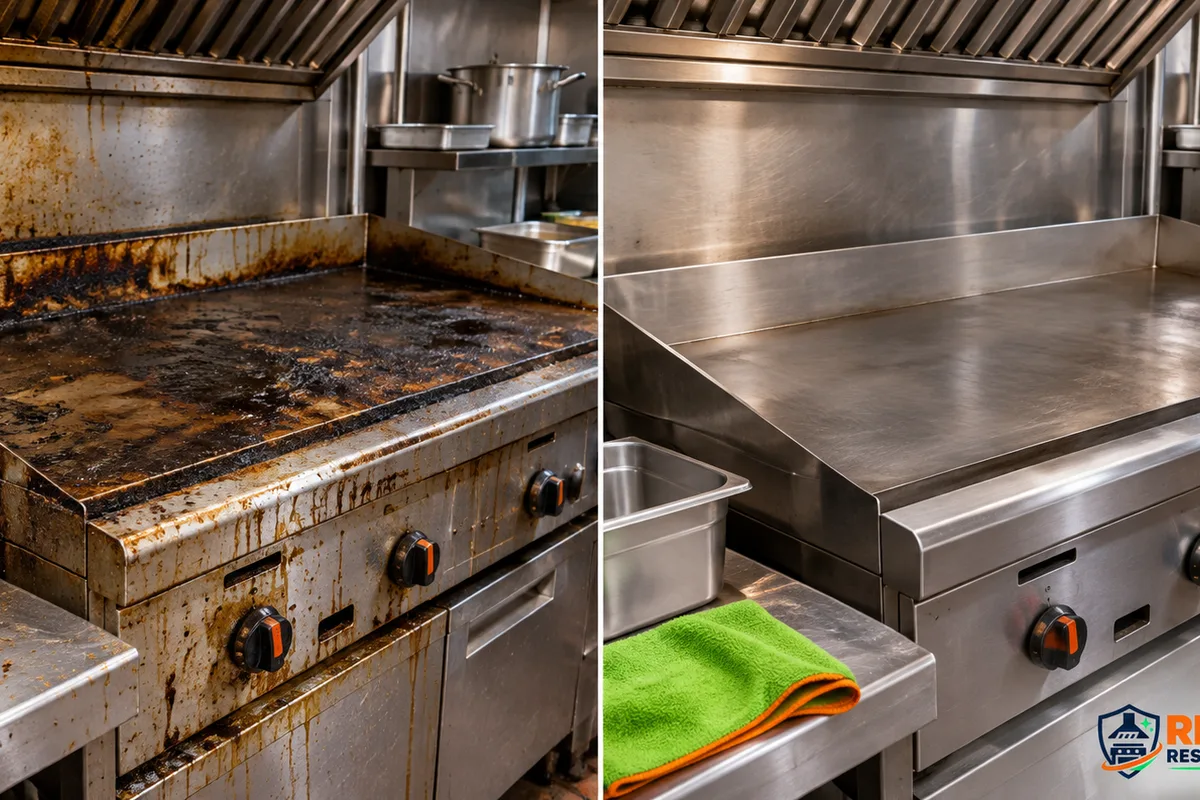
Side-by-side view of the same commercial griddle exterior and surrounding stainless steel surfaces before cleaning with heavy grease buildup and after detailed cleaning, without implying mechanical restoration.
A realistic comparison focused on accessible exterior surfaces and surrounding splash areas.
Safe methods

Why Careful Product and Tool Selection Matters

Commercial kitchen soil is rarely uniform. Fresh cooking oil, polymerized grease, carbon deposits, sugary residue, and mineral film respond differently to cleaning chemistry. A stronger product is not automatically a better choice. The cleaner must be compatible with the surface, used at the labeled dilution, given appropriate dwell time, and removed as directed.

Food-contact surfaces require special care. Cleaning removes soil; sanitizing is a separate step performed after the surface is clean, using an approved sanitizer at its labeled concentration and contact time. Products should never be mixed, and chemical residue should not remain on surfaces that contact food.

Aggressive scraping can scratch stainless steel, while excess moisture can enter controls or electrical openings. Equipment should be cool enough for the chosen method, and gas, electrical, or plumbing connections should be handled only by qualified people when disconnection is required. These controls protect the appliance and give kitchen management a clear standard for putting it back into service.

Request a Callback
Questions answered

Questions Short Pump Restaurant Operators Ask

Can equipment be cleaned while our restaurant is open?

Some work can be scheduled around operating hours, but equipment being cleaned generally must be out of service, cool, emptied where necessary, and safely accessible. For Short Pump kitchens with narrow windows between late service and morning prep, phased cleaning may keep more of the line available.

How long does commercial kitchen equipment cleaning take?

A small group of accessible appliances may take several hours, while a full cook line with heavy carbon and grease can require a longer service window. The equipment count, soil level, cooldown time, and access behind units determine the schedule.

Do you move fryers, ranges, refrigerators, and other heavy equipment?

Equipment is moved only when its weight, utility connections, floor condition, and manufacturer guidance allow safe access. Restaurant staff or qualified tradespeople may need to disconnect gas, electricity, water, or fixed restraints before a unit can be moved.

Can you remove every stain and carbon mark?

Cleaning can remove substantial grease, food soil, and carbon deposits, but it cannot reverse corrosion, heat discoloration, etched finishes, worn coatings, or permanent staining. We distinguish removable buildup from existing surface damage during the review.

How often should restaurant equipment be professionally cleaned?

The interval should be based on equipment type, grease production, hours of use, and the effectiveness of daily cleaning. A busy fryer or charbroiler near Short Pump's West Broad Street restaurant corridor may need a shorter rotation than a low-use warming cabinet.

Do you clean inside ovens, fryers, refrigerators, and ice machines?

Interior cleaning depends on the appliance, access, operating condition, and agreed scope. Some internal components require manufacturer procedures or an appliance technician, and ice machines have specialized cleaning and sanitizing requirements that should be confirmed before scheduling.

What should our staff do before the appointment?

Staff should remove food and portable utensils, empty equipment included in the scope, allow hot appliances to cool, and provide clear access to the work area. Any required utility shutdown or disconnection should be completed by an authorized person before the crew begins.

Plan a Cleaner, Service-Ready Kitchen

Tell Richmond Restaurant Cleaning which appliances need attention, when your kitchen can release them, and where buildup is heaviest. We will help define a practical scope and service window for your Short Pump operation.