Kitchen Deep Cleaning
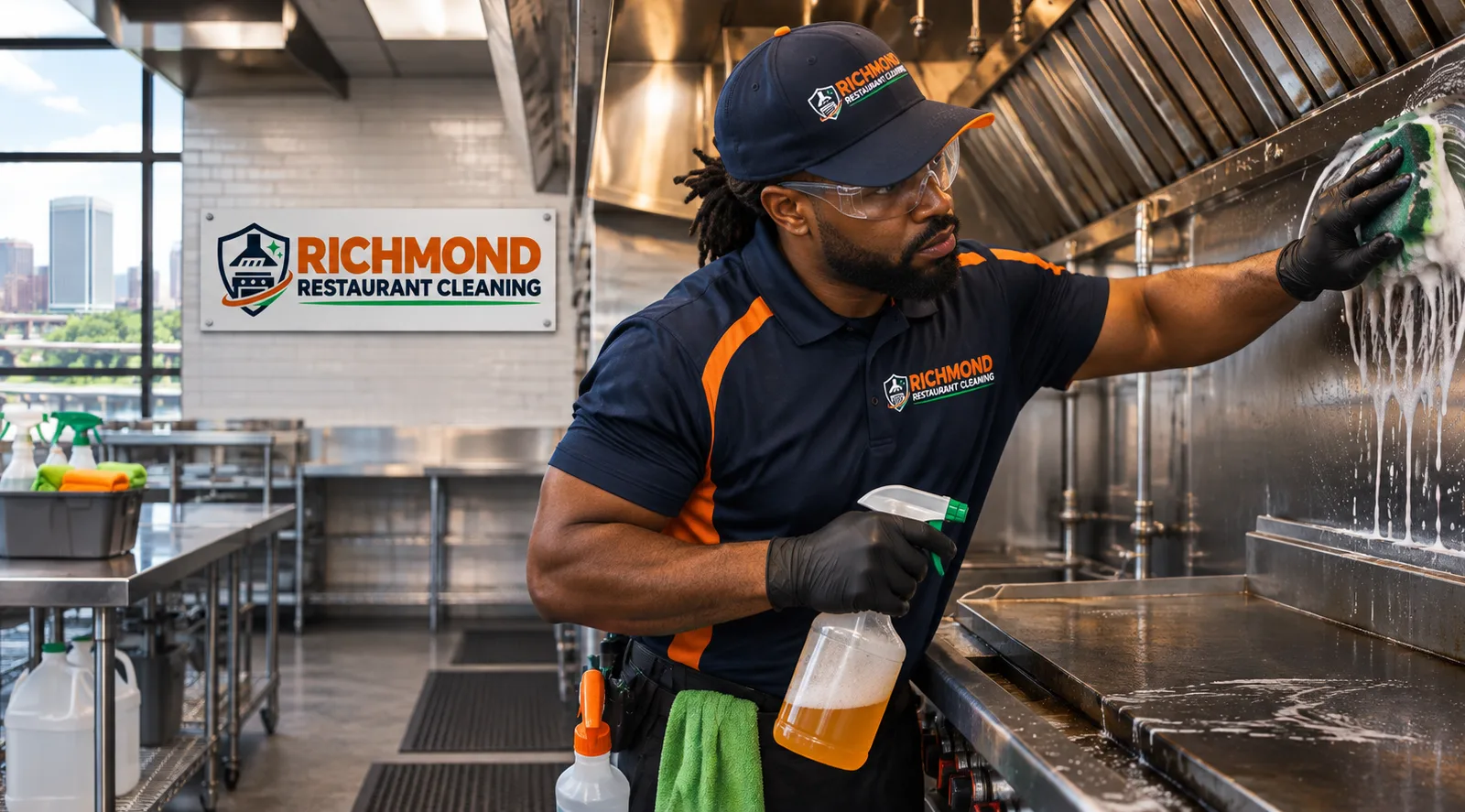
Degreasing and detailed cleaning for cook lines, equipment exteriors, stainless-steel surfaces, backsplashes, walls, floors, drains, and accessible areas behind or beneath movable equipment.
Serving Richmond, Virginia & surrounding areas
Detailed cleaning for commercial kitchens, walk-in coolers, dining areas, and hard-to-reach surfaces, scheduled around your operating hours.
A restaurant cleaning company should address the residue and hidden buildup that routine closing duties leave behind. Richmond Restaurant Cleaning provides planned deep cleaning for kitchens, walk-in coolers, dining rooms, storage areas, restrooms, and high surfaces. The work can be organized as a one-time reset or a recurring detailed-cleaning program based on your hours, equipment, and priorities.
Before work begins, we define the rooms, equipment, surfaces, access requirements, and exclusions in writing. That preparation matters in active food-service spaces, where chemicals, tools, and moisture must be controlled around food, packaging, and electrical equipment. Throughout the process, Richmond's trusted restaurant team coordinates the work so managers know what needs to be cleared, what will be cleaned, and when each area can return to use.
Our local planning accounts for different operating conditions. Shockoe Bottom restaurants may need service timed around late-night traffic and limited loading access. Scott's Addition breweries and food venues often combine production areas with customer-facing spaces. Carytown's compact storefronts can require tighter staging and careful movement of equipment. In Downtown Richmond, building access and shared loading arrangements may shape the schedule. Each location receives a scope based on its actual layout rather than a generic checklist.
Define a practical cleaning scope across back-of-house, guest-facing, storage, and elevated areas.
Degreasing and detailed cleaning for cook lines, equipment exteriors, stainless-steel surfaces, backsplashes, walls, floors, drains, and accessible areas behind or beneath movable equipment.
Cleaning of accessible shelving, walls, doors, gaskets, floors, and nonfood-contact surfaces after products have been removed or protected according to the agreed preparation plan.
Removal of dust and residue from accessible vents, pipes, ledges, light housings, ceiling fans, and other elevated surfaces using suitable extension tools and access equipment.
Detailed attention to tables, chair bases, booths, partitions, trim, fixtures, floors, and touchpoints after loose items and guest materials have been cleared.
Cleaning for dry-storage rooms, employee areas, service corridors, and other included support spaces, with care taken around labeled supplies and stored goods.
Deep cleaning of fixtures, partitions, walls, floors, base edges, dispensers, and touchpoints, including attention to buildup missed during routine service.
Commercial kitchen deep cleaning starts with soil identification. Grease needs an appropriate degreaser and dwell time. Carbonized residue may require controlled agitation or scraping with a surface-safe tool. Mineral deposits, food residue, and ordinary dust call for different products and methods. Using one chemical everywhere can damage finishes or spread soil rather than remove it.
Our restaurant deep cleaners work methodically through the agreed cleaning zones. Food and single-service items must be removed, covered, or otherwise protected before chemicals are introduced. Safety Data Sheets provide handling information for cleaning products, while product labels specify dilution, dwell time, and approved surfaces. Food-contact surfaces included in the work are cleaned and treated according to the applicable product directions before the area is returned to service.
Some tasks require clear boundaries. Hood exhaust systems, ductwork, fire-suppression components, pest treatment, and equipment repair are specialized work and should not be assumed to be part of general restaurant detailed cleaning. During scoping, we identify accessible surfaces and discuss any conditions that may require another qualified provider.
Request a Callback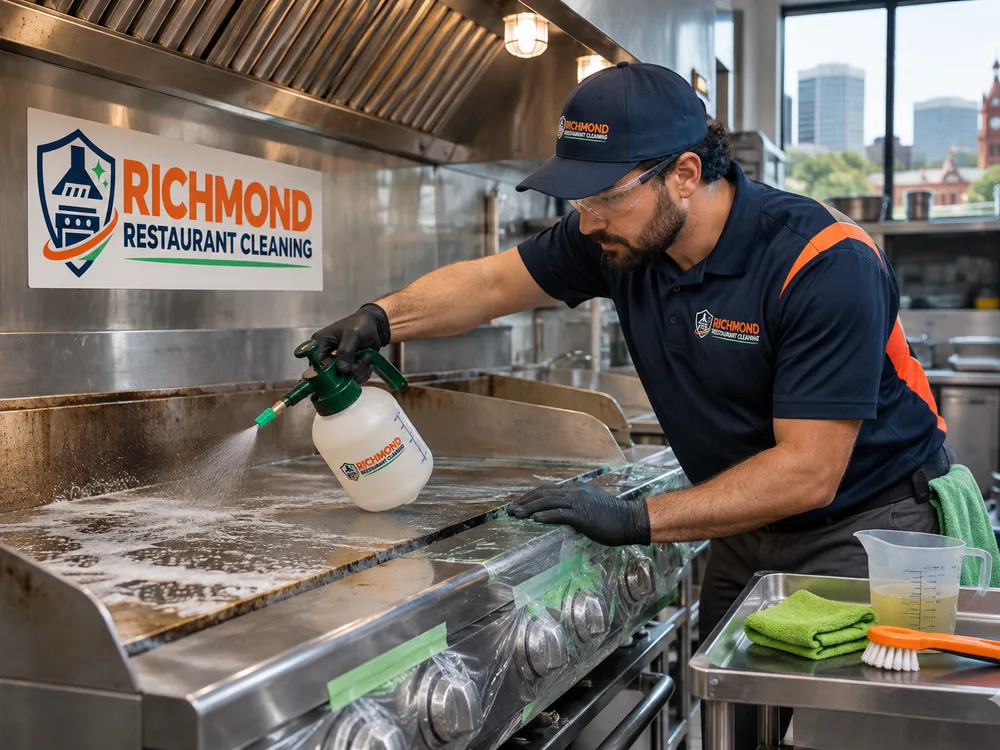
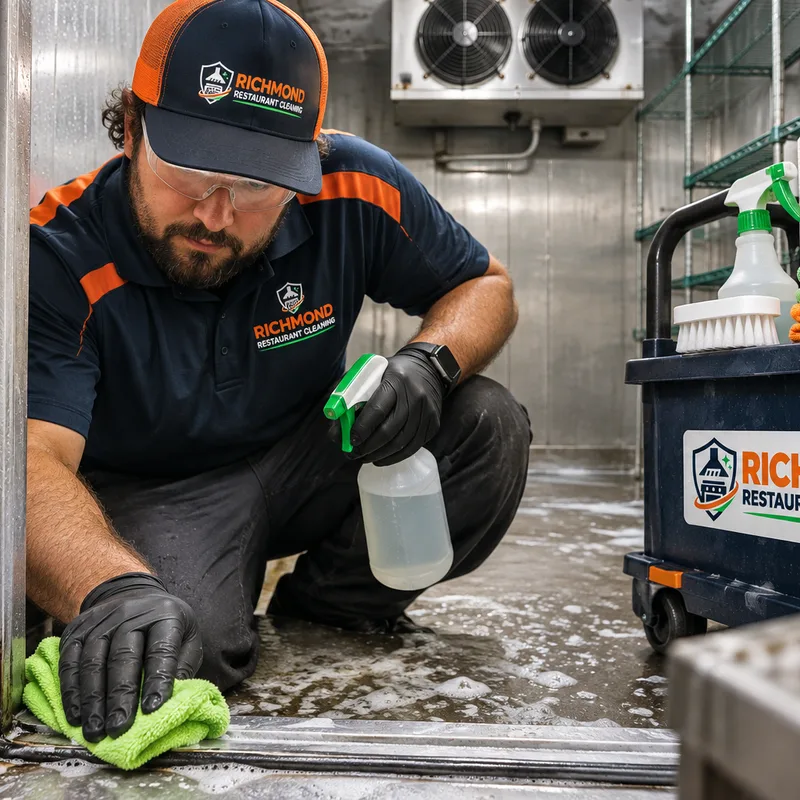
Walk-in cooler cleaning requires preparation before the first surface is touched. Management should decide how food will be removed, transferred, or protected and how safe holding temperatures will be maintained. Once the cooler is ready, the cleaning scope may include accessible shelves, wall panels, door surfaces, gaskets, floors, and corners. Evaporator coils, refrigerant components, and electrical repairs remain work for qualified refrigeration technicians.
High dusting addresses overhead soil that can settle onto lower surfaces. In Richmond restaurants with exposed ceilings, open ductwork, decorative beams, or suspended fixtures, the cleaning plan should account for safe access and fallout control. Elevated work is normally completed before lower surfaces and floors so loosened dust is captured during the later cleaning stages.
Richmond's humid summers can also increase condensation around coolers and temperature transitions. Cleaning can remove surface residue, but recurring moisture may indicate a door-seal, airflow, insulation, or refrigeration issue that needs technical evaluation. We report visible concerns rather than covering them with fragrance or treating them as a cleaning-only problem.
Request a CallbackWe review the kitchen, cooler, dining space, storage areas, access points, and operating schedule. Managers can identify inspection concerns, problem buildup, and surfaces that need special handling.
The scope records included rooms, accessible equipment surfaces, exclusions, and the expected cleaning window. It also states what your staff should remove, secure, cool down, disconnect, or protect before arrival.
The crew stages tools and products, protects nearby areas, and confirms that food and service items are clear of the active work zone. Cleaning begins only after the agreed preparation is complete.
High surfaces are addressed before lower fixtures and floors when the scope requires it. Products are used according to label directions, and agitation methods are selected for the finish and soil.
Completed areas are reviewed against the scope. Any inaccessible surface, damaged component, persistent moisture, or maintenance concern observed during the work is documented for management.
Restaurant deep cleaning in Richmond typically costs about $500 to $1,500 for a smaller targeted job, while extensive kitchens or multi-area projects may range from $1,500 to $4,000 or more. These are general planning ranges, not a quote.
Final pricing depends on kitchen size, grease and carbon buildup, movable equipment, high-access work, cooler preparation, parking or loading constraints, and whether service must occur overnight. A walk-through also clarifies exclusions such as hood ducts or equipment repair. The exact cost is confirmed after an on-site assessment and written scope.
Restaurant detailed cleaning works best when the scope is specific enough to verify. A useful proposal identifies the rooms and surfaces, states who moves equipment or products, notes access limitations, and separates cleaning from repair or specialty maintenance. It should also describe how schedule changes are handled if the kitchen is still hot, occupied, or not prepared at the arranged start time.
We plan around the realities of restaurant operations rather than asking staff to interpret a vague service description. A single kitchen deep cleaning may focus on accumulated grease and inaccessible floor edges. A broader reset can include the cooler, front of house, storage, restrooms, and high dusting. Recurring service can then target the areas that accumulate residue fastest between routine cleanings.
Professional restaurant deep cleaning is also easier to manage when one person on your team is authorized to approve access and review the finished work. That contact can answer questions about equipment, restricted areas, alarm procedures, and product storage. Clear responsibility keeps the cleaning window productive and gives management a record of what was completed.
If routine closing work is no longer reaching the buildup behind equipment, inside the cooler, or overhead, arrange a walk-through and receive a written cleaning scope based on your restaurant's layout and schedule.
Call for a Free QuoteYes, work can be planned around closing hours when crew access, alarm procedures, lighting, parking, and a management contact are arranged in advance. In areas such as Downtown Richmond and Shockoe Bottom, loading access and late-night activity should be discussed during scheduling because they can affect arrival and equipment staging.
A targeted cleaning may take one shift, while a large kitchen or multi-area restaurant may require a longer window or phased visits. The duration depends on grease buildup, equipment access, cooler preparation, high dusting, floor condition, and the number of surfaces included. A walk-through provides a realistic schedule before the work date.
Yes, food, utensils, packaging, and single-service items in the active cleaning zone generally need to be removed or protected before work starts. For walk-in cooler cleaning, management must also arrange suitable product storage and temperature control. The preparation plan identifies which shelves, counters, and equipment areas must be cleared.
Only equipment identified as safe and practical to move is included, and responsibility for moving it is established in the written scope. Gas-connected, hardwired, plumbed, heavy, or manufacturer-restricted equipment may need qualified handling. Accessible areas around fixed equipment can still be addressed without creating a utility or damage risk.
Hood exteriors and accessible surrounding surfaces may be included, but internal exhaust ducts, fans, and fire-suppression components require a separately defined specialty service. The scope should distinguish ordinary kitchen degreasing from exhaust-system work so management can coordinate the appropriate providers.
The right interval depends on cooking volume, menu, equipment layout, operating hours, and how quickly residue returns. Frying and high-heat cooking can create faster grease buildup than light preparation. A useful plan starts with an initial deep clean, then sets recurring attention by zone based on observed conditions rather than one interval for the entire restaurant.
High dusting should be completed when food preparation has stopped and exposed food, utensils, and service items are removed or protected. Elevated cleaning can release dust onto lower surfaces, so it is normally scheduled before counters, equipment exteriors, and floors are finished. Safe access requirements are confirmed during the walk-through.
Tell Richmond Restaurant Cleaning which areas need attention, when the restaurant is available, and what buildup concerns your team. We will define the preparation requirements, cleaning scope, exclusions, and schedule before work starts.