Cooking Line Degreasing
Cleaning around ranges, fryers, flat-top griddles, charbroilers and other line equipment, including accessible sides, fronts, backs and undersides specified in the scope.
Serving Richmond, Virginia & surrounding areas
Detailed commercial cleaning for cooking lines, equipment, hoods, floors, walls and food preparation areas, scheduled around your restaurant's operating hours.
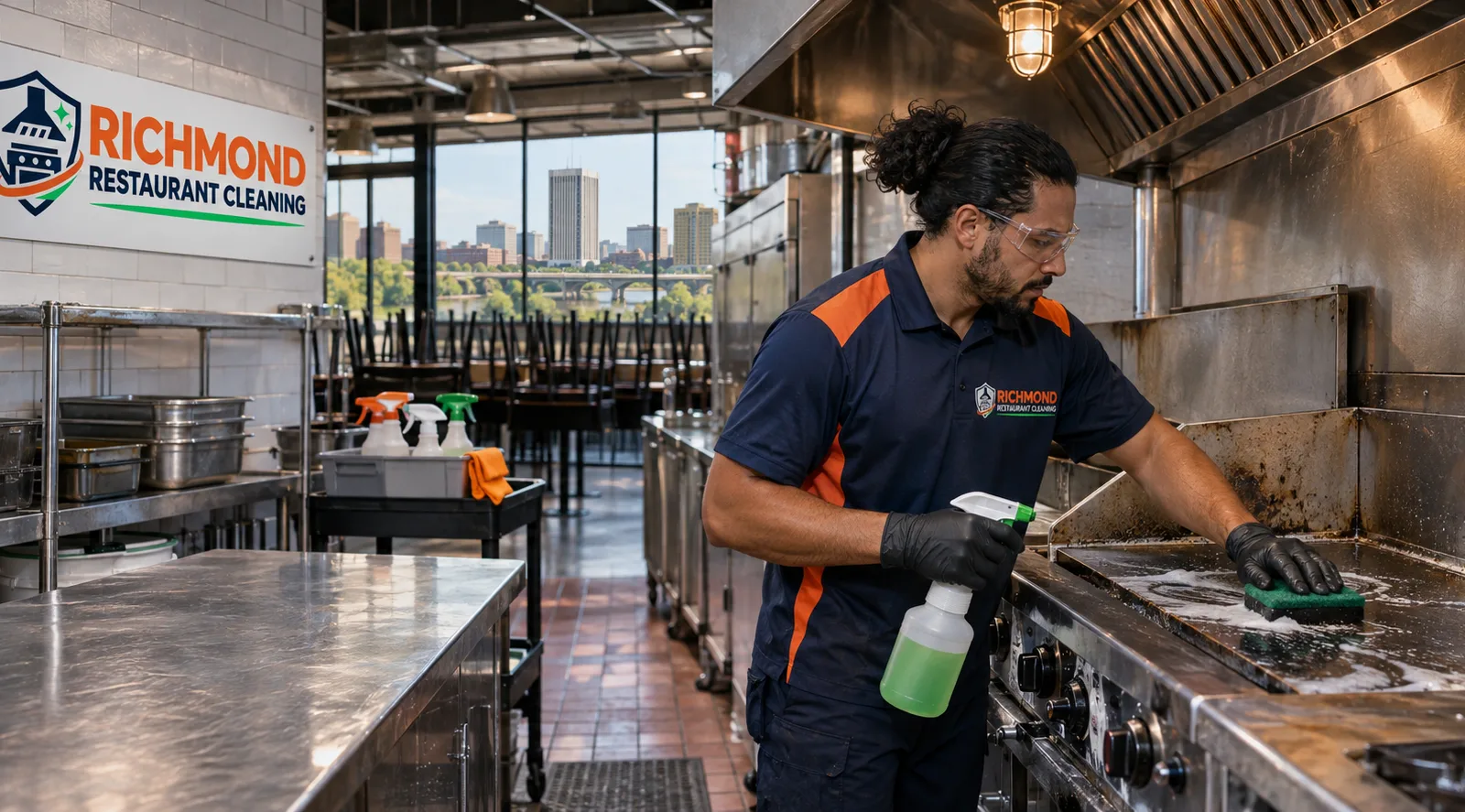
Kitchen Cleaning Services remove the grease, carbonized residue and food soil that routine closing work may leave behind. Richmond Restaurant Cleaning develops the scope around your equipment, production schedule and problem areas rather than applying the same checklist to every operation.
A full visit can include cooking equipment, stainless steel surfaces, preparation tables, sinks, shelving, walls, floors and other agreed areas. We identify items that need special handling, determine which equipment can be moved safely and plan the work for a time that limits disruption. As a restaurant company Richmond homeowners rely on, we bring the same practical care to each job: define the work first, protect surrounding surfaces and leave the kitchen ready for your staff's next steps.
Restaurants near Shockoe Bottom often operate in older commercial buildings where tight access and compact back-of-house layouts affect how equipment can be reached. Carytown dining rooms may have limited windows for overnight work because service extends into the evening. In Scott's Addition, production kitchens and high-volume dining concepts can create larger equipment lines and heavier grease loads. These conditions change the plan, crew needs and estimated duration, so they are discussed before work begins.
Build a practical scope around the equipment, surfaces and working areas that need attention.
Cleaning around ranges, fryers, flat-top griddles, charbroilers and other line equipment, including accessible sides, fronts, backs and undersides specified in the scope.
Removal of grease and food residue from stainless steel equipment, worktables, carts, shelving and exterior appliance surfaces using methods suited to each material.
Scrubbing of washable floors and walls, with attention to edges, corners, grout lines, floor-wall junctions and accessible areas under equipment.
Detailed cleaning of sinks, preparation tables, splash areas and other agreed surfaces after food and removable supplies have been cleared by restaurant staff.
Surface cleaning and degreasing around accessible hood exteriors, canopies and removable filters when included in the written scope.
Cleaning of empty, accessible shelving, cooler interiors and dry-storage surfaces when products are removed or safely consolidated before the appointment.
Grease does not stay on the visible face of a fryer or range. It migrates into seams, settles beneath equipment and combines with dust on walls, casters, utility lines and floor edges. A commercial kitchen deep cleaning plan targets these accumulation points while accounting for equipment connections and surfaces that should not be saturated.
We match the method to the soil and material. Alkaline degreasers are commonly used on compatible grease-coated surfaces, while stainless steel requires suitable products and wiping direction to reduce streaking. Carbonized deposits may need controlled dwell time and hand agitation. Floors can require mechanical scrubbing or repeated extraction, depending on texture, buildup and access. Chemicals must never be mixed, and product label directions govern dilution, contact time and required protective equipment.
Hood work needs a clearly defined boundary. Cleaning accessible canopy surfaces or removable filters is different from cleaning the complete exhaust system, including ductwork and the rooftop fan. Restaurants seeking restaurant hood cleaning in Richmond, VA should confirm whether the proposed scope addresses the full grease exhaust path and whether the provider supplies documentation appropriate to that specialized work.
Request a Callback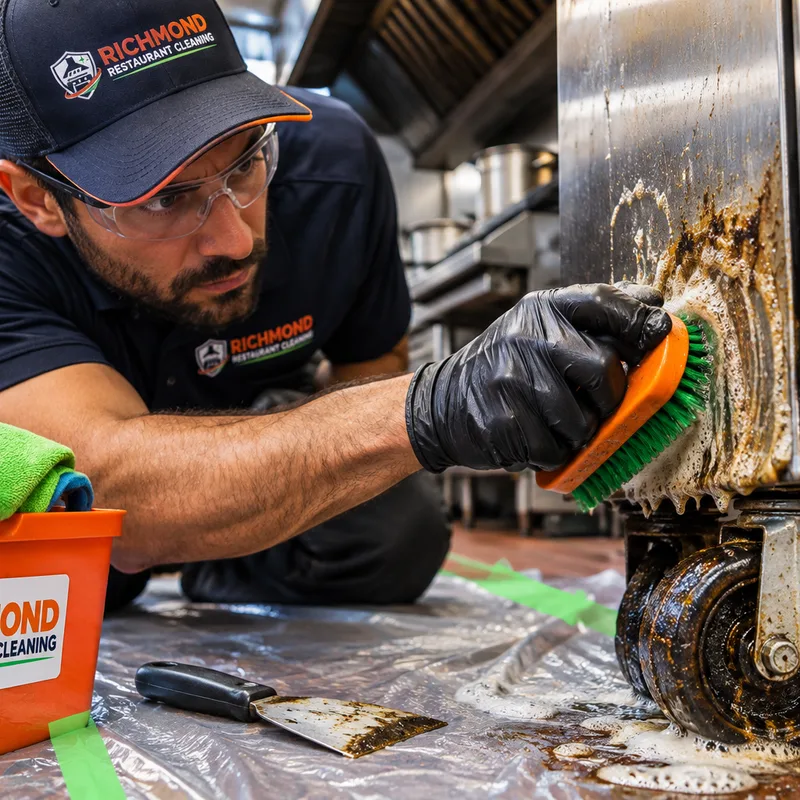
We review the cooking line, preparation areas, floors, walls, storage spaces and access points. You can identify recurring trouble spots, equipment restrictions and the time by which the kitchen must be available again.
The proposed work states which surfaces and equipment are included, what must be emptied or moved, and whether hood-related work is limited to accessible exterior components. This keeps responsibilities clear before the crew arrives.
Restaurant staff remove exposed food, smallwares and personal items. The crew stages supplies, protects sensitive areas and follows the agreed shutdown requirements for equipment that will be cleaned.
The team works through the planned areas using appropriate degreasers, agitation, scraping, wiping and floor-cleaning methods. Soil and wastewater are handled according to the site conditions and product instructions.
The cleaned areas are checked against the written scope. Any access limitation or maintenance concern seen during the work is communicated so your team can decide what needs follow-up.
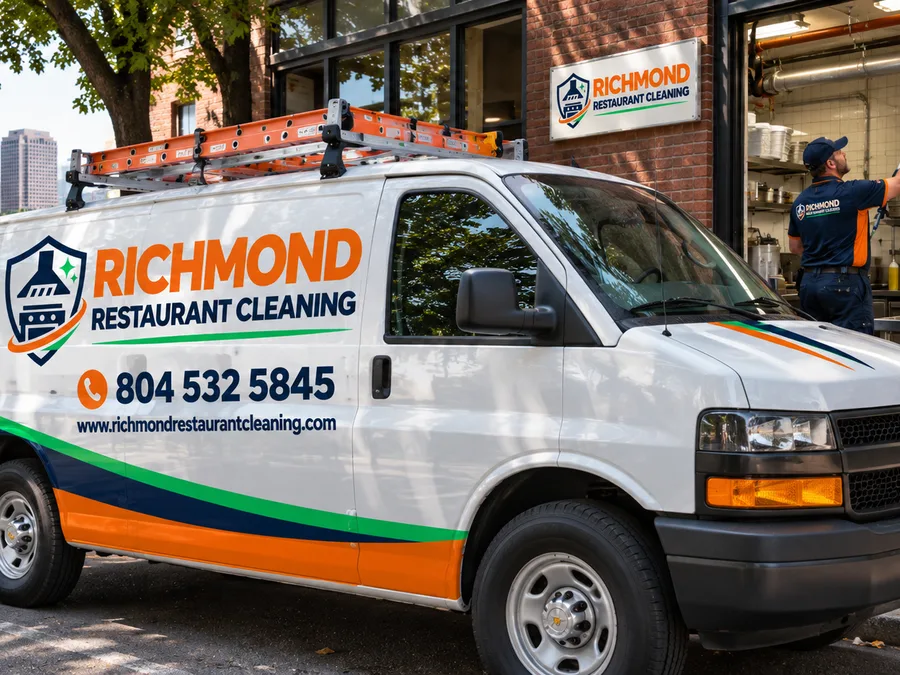
Professional kitchen cleaning should fit the restaurant's operating cycle. The best appointment window depends on closing time, equipment cooldown, prep schedules, deliveries and when staff need to regain access. A compact line may be handled in one planned visit, while a large kitchen or heavy initial buildup may be divided into zones.
Richmond's humid summers can make greasy floors and enclosed work areas slower to dry, particularly where ventilation is limited. Air movement, controlled water use and enough drying time matter when the kitchen must reopen the next morning. Winter appointments bring a different concern: doors cannot remain open unnecessarily while equipment and supplies move through the building.
Downtown Richmond kitchens may also have loading, parking or building-access rules that affect setup. At our base on North 18th Street, Richmond Restaurant Cleaning is positioned near the city's central restaurant districts, but the schedule is built around the actual property conditions. Tell us about secured entrances, elevators, shared loading areas and overnight access before the visit so the crew can arrive prepared.
Request a CallbackCompare providers by the detail of their proposed scope, not by a single total. A useful proposal identifies the equipment and surfaces to be cleaned, lists exclusions and explains what the restaurant must do before arrival. Ask whether the price assumes that heavy equipment is already movable, whether interiors are included and how inaccessible areas are handled.
For hood-related work, ask if the proposal covers only visible canopy components or the full exhaust system. Those are different scopes. The provider should also be able to discuss chemical selection, safety data sheets, personal protective equipment and methods for protecting electrical components, pilot assemblies and food-contact items.
Frequency should follow actual use. Fryer-heavy kitchens, charbroilers and high-volume production can create grease faster than light-duty preparation. Some restaurants benefit from a recurring rotation that addresses selected zones on different visits, while others schedule a comprehensive initial cleaning followed by targeted maintenance. A walkthrough is the soundest way to establish priorities.
Request a CallbackGet a written scope that reflects your equipment, grease load, access conditions and operating schedule before cleaning begins.
Call for a Free QuotePricing is based on labor, kitchen size, grease buildup, equipment count, access and the exact areas included. A compact cooking line with regular upkeep requires less work than a large kitchen needing equipment movement, heavy carbon removal and detailed floor cleaning. An on-site walkthrough at the Richmond property provides the information needed for a written estimate.
A cleaning visit can take several hours or a full overnight window, depending on scope and condition. Equipment must cool before certain work begins, and cleaned surfaces need enough time to dry before preparation resumes. Kitchens with tight access, such as some older commercial spaces around Shockoe Bottom, may require additional time to reach equipment sides and floor edges safely.
Yes, after-hours scheduling can be planned around closing, equipment cooldown and the next preparation shift. The restaurant should provide access, remove exposed food and confirm which equipment can be shut down. Late service hours in areas such as Carytown need to be considered when setting the crew's arrival and completion window.
Movable equipment can be addressed when access, utility connections and the written scope allow it. Hard-connected, gas-connected or unusually heavy units should not be moved casually. During the walkthrough, the team identifies what can be repositioned safely, what restaurant staff must prepare and which inaccessible areas remain excluded.
Accessible hood exteriors, canopies and removable filters may be included when they are listed in the scope, but full exhaust-system cleaning is a distinct service. Complete hood-system work can involve the plenum, ductwork and rooftop fan. Richmond restaurant operators should confirm exactly which components will be cleaned and what service documentation will be supplied.
Remove exposed food, smallwares, utensils, cardboard and personal items from the work area before the crew arrives. Confirm equipment shutdown instructions, provide access to agreed spaces and identify sensitive controls or known maintenance issues. Emptying specified coolers or shelves in advance gives cleaners direct access and reduces time spent waiting on site.
The right interval depends on menu, volume, equipment and how quickly grease or food soil returns. Fryers and charbroilers generally create different cleaning demands than cold preparation. A Richmond restaurant with extended operating hours may choose recurring zone cleaning, while a lower-use kitchen may schedule broader periodic visits after condition reviews.
Describe your cooking line, operating hours and priority areas. Richmond Restaurant Cleaning will help define a practical scope and appointment window for your restaurant.